2026 / 05 / 25
What to Check Before Choosing a Plush Toy Manufacturer for Custom Orders
Choosing a plush toy manufacturer for custom orders is not only a price decision. For importers, retail buyers, amusement operators, promotional gift teams, and pet product sellers, the real question is whether a factory can turn a concept into stable bulk production without losing shape, color, texture, safety, or delivery control.
Why Supplier Selection Shapes the Whole Custom Order
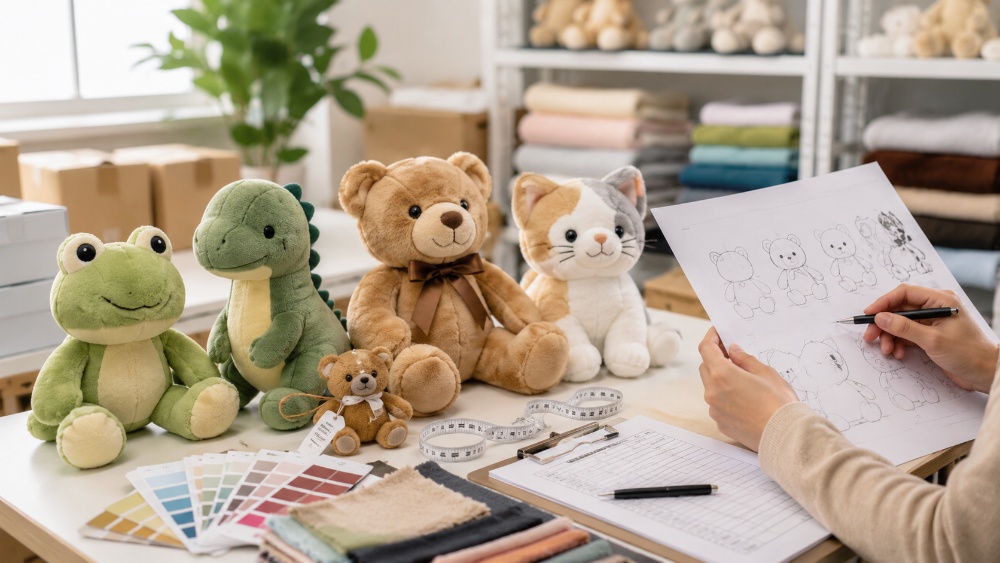
Custom plush sourcing involves many steps. Buyers often do not expect this level of detail. A reference image appears straightforward. Yet turning it into a finished plush toy requires careful work on pattern making, fabric selection, filling control, embroidery or printing, sewing accuracy, label placement, packaging design, and final inspection.
A buyer choosing a plush toy manufacturer should look beyond a sample photo. The supplier needs to explain how the sample will become a repeatable production item. This includes confirming whether the toy is for retail shelves, claw machines, theme park prizes, brand campaigns, holiday displays, or pet product lines. Each use case has different limits for size, weight, softness, decoration, durability, and packaging.
Check Product Range and Market Fit
Theme Coverage for Different Buyers
A strong product range does not mean a factory must offer every possible toy. It means the factory has enough development experience to handle different themes, body shapes, and market styles. Animal plush, teddy bears, fantasy plush, food-shaped toys, seasonal items, and character-inspired products all require different pattern decisions.
For example, animal plush toys may need realistic shapes or cartoon expressions. Gift plush often needs a soft hand feel and clear shelf appeal. Promotional plush may require logo placement, brand colors, or custom hang tags.
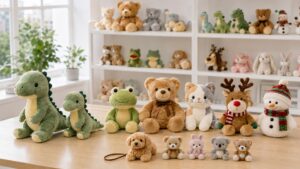
The 20CM、25CM and 30CM dinosaur is a useful example of why buyers should check size options early. A design available in several sizes can serve different price points, retail displays, and gift channels without forcing the buyer to create a new concept from zero.
Size, Weight, and Channel Fit
Size is not a small detail. A 15 cm toy may work for small gifts, hanging accessories, or amusement prizes. A 25 cm plush may suit retail shelves or children’s gifts. Larger pieces can support window displays, holiday campaigns, or themed events, but they also affect carton size, freight cost, and storage planning.
Weight also matters. Plush toys for claw machines should not be judged only by appearance. If a product is too large, too heavy, too slippery, or poorly balanced, it may not perform well in the equipment. Retail plush needs shape stability after transport. Pet plush may need stronger seams and fewer fragile decorations.
Review Design and Sampling Capability
From Concept to Confirmed Sample
A custom plush manufacturer should be able to work from sketches, reference images, brand mascots, existing samples, or rough product ideas. The buyer does not always have a finished technical drawing, so the supplier must help turn a creative direction into a workable plush structure.
The sample stage should confirm more than appearance. Buyers should review the front, side, and back view, size, fabric, filling level, embroidery, printing, accessories, label position, and packaging method. If the sample is for a retail program, shelf presence and brand fit also matter. If it is for amusement or promotion, cost control and repeatable production may matter more.
Material and Craft Choices
Material choice affects cost, touch, safety, and product positioning. Short plush, ultra-soft plush, elastic plush, and other fabrics create different textures. Filling choices such as PP cotton or other soft fillings change firmness and recovery. Embroidery, printing, woven labels, hang tags, and custom packaging add brand value, but each added detail needs inspection.
Buyers comparing soft toy manufacturers should avoid choosing the cheapest material without considering the sales channel. A promotional plush may need a simple structure and clean logo placement. A premium gift plush may need better fabric, fuller filling, and finer embroidery. A children’s plush line may need stricter attention to small parts, seams, and washable performance.
For buyers planning several product lines, reviewing custom plush toy services can help structure questions before sending an inquiry. Design support, material selection, sample production, quality inspection, customized packaging, logistics matching, and after-sales support should all be part of the evaluation.
Ask How Quality Is Controlled Before Bulk Production
Production Checks Before Final Inspection
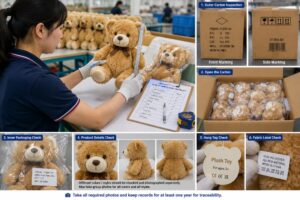
Quality control must start before mass production begins. It should not occur after the goods are packed. Buyers need to ask how the factory inspects raw materials and verifies colors. They should also learn how cutting accuracy stays under control and how sewing consistency is maintained. Bulk goods must be compared with the approved sample.
Several checkpoints hold importance. They cover fabric quality and filling amount. Shape consistency and seam strength also matter. Embroidery position and print alignment require review. Hang tag accuracy and fabric label placement need checks. Carton marks and barcode readability complete the list. Small deviations can lead to larger problems for custom orders. Such issues arise particularly if the order links to a brand campaign or retail launch date.
Safety and Defect Classification
Safety-related defects require stricter control than ordinary appearance issues. Loose accessories, exposed sharp parts, holes at seams, heavy stains, irritating odor, needle fragments, missing warning labels, or incorrect tags can create serious risk. These issues are especially important for children’s plush toys and export orders.
Professional stuffed animal manufacturers usually separate defects by severity. Critical defects may involve safety risks or failure to meet required standards. Major defects can affect normal use or salability, such as incorrect size, open seams, color deviation, loose accessories, or visible stains. Minor defects are usually small appearance issues that do not affect function or safety.
This type of classification helps buyers and suppliers speak the same language during inspection. A small loose thread should not be treated like a sharp object inside a toy, and a safety risk should never be treated as a normal cosmetic flaw.
Match the Supplier to Your Sales Channel
Retail, Promotion, and Gift Programs
A plush toy supplier serving retail buyers should think in product lines, not only single items. Retail programs often need different animals, colors, expressions, and sizes that sit together as one shelf-ready collection. Packaging, tags, and display appeal can influence purchase decisions as much as the toy itself.
For promotional and gift buyers, the priorities may be different. Brand color, logo detail, campaign timing, budget range, and delivery date often guide the order. A simple plush design with a well-placed logo and clean packaging may perform better than an over-complicated design that increases cost and production risk.
Amusement, Holiday, and Pet Product Needs
Amusement plush toys need frequent style updates because game players respond to novelty. For claw machines, carnival prizes, theme parks, redemption counters, and capsule-style channels, design appeal must be balanced with cost, size, and repeatable supply.
Across these channels, plush toy solutions should be judged by how well they fit the buyer’s real selling scene, not by how broad the product catalog looks.
Compare Price, MOQ, Lead Time, and Support
Price matters, but it should not be reviewed alone. The lowest quote may use weaker fabric, less filling, simpler stitching, limited packaging, or fewer inspection steps. A better quote should make the cost structure clear: design complexity, size, material, filling, workmanship, testing, packaging, order quantity, and shipping method.
MOQ should also be reviewed with context. A simple existing-style order may be easier to start. A fully customized product with special fabric, detailed embroidery, new packaging, or several sizes may require more preparation. Buyers should ask whether the MOQ changes by size, color, material, or design complexity.
Buyer Checklist Before Confirming a Custom Plush Order
Before choosing a custom plush manufacturer, buyers can use this checklist to reduce sourcing risk:
- Is the target sales channel clear?
- Does the supplier have relevant product experience for retail, promotion, amusement, holiday, or pet markets?
- Are the size, weight, fabric, filling, colors, and decoration details confirmed?
- Is there a sample approval process before bulk production?
- Are safety standards, small parts, seams, labels, and packaging checked?
- Are inspection steps documented before shipment?
- Is the MOQ reasonable for the design and material choice?
- Are production timing and shipment needs clear?
- Can the supplier support logo details, hang tags, fabric labels, or custom packaging?
Where Victory Toys Fits into the Sourcing Process
YIWU VICTORY IMP. & EXP. CO., LTD. supports custom plush development across amusement, retail, promotion, holiday, and pet product channels. The product range covers animal plush toys, teddy bears, fantasy plush, food plush, seasonal plush toys, and other themed styles. For buyers, the practical value lies in linking design, sampling, material choice, quality checks, packaging, and bulk production planning.
We do not need to turn every sourcing discussion into a company introduction. What matters for buyers is whether a partner can help make the product easier to produce, inspect, ship, and sell. That is the real measure of a strong sourcing fit.
Conclusion
Choosing a production partner for custom orders should never be based on a sample photo or a low quote alone. Buyers need to check product range, market fit, sample control, material options, inspection methods, safety requirements, MOQ, lead time, and long-term support. A well-planned sourcing process reduces production risk and helps each plush toy fit its intended sales channel.
For retail, amusement, promotional, holiday, or pet plush projects, share your custom plush order requirements and discuss the design idea, size, material, packaging, and bulk order plan before production starts.
FAQ
Q: What should buyers ask before choosing a custom plush partner?
A: Buyers should ask how the supplier handles design support, sample confirmation, fabric selection, filling materials, safety checks, inspection steps, MOQ, lead time, packaging, and shipment planning. These details help confirm whether the partner can support stable custom production instead of only providing a low initial quote.
Q: What is the difference between a plush toy supplier and a custom plush manufacturer?
A: A plush toy supplier may provide existing styles, wholesale products, or general sourcing support. A custom plush manufacturer usually offers deeper development support, including pattern making, sample production, material selection, logo details, packaging customization, and bulk production control.
Q: Are stuffed animal manufacturers and soft toy manufacturers the same?
A: The two terms are often close in B2B sourcing, but they are not always identical. Stuffed animal manufacturers usually focus on animal-shaped plush toys, while soft toy manufacturers may cover a wider range of soft fabric products, including animals, fantasy characters, food-shaped toys, holiday designs, and promotional plush items.


