2026 / 07 / 20
Más allá de la caja: Cómo el embalaje inteligente de los juguetes de peluche reduce los costes de importación.
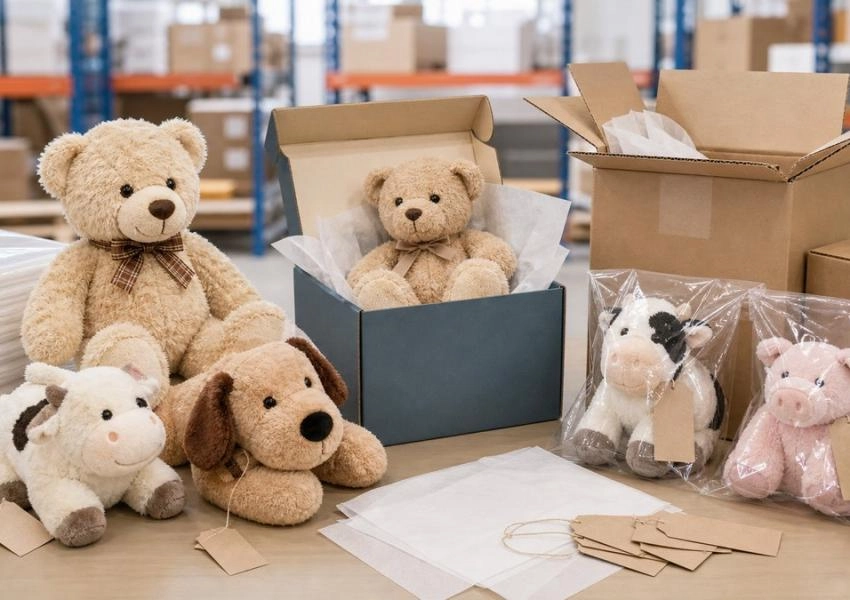
Un comprador puede pasar semanas perfeccionando el diseño, eligiendo la tela y aprobando los colores, y luego posponer el empaquetado hasta que el pedido esté casi terminado. Ahí es donde comienzan los problemas evitables. La cantidad de cajas afecta el flete, pero la forma en que el juguete se coloca dentro de la caja también afecta su apariencia, apilamiento, etiquetas y la primera impresión. Como proveedores de juguetes de peluche, hablamos sobre el empaquetado mientras aún se está desarrollando la muestra. Esto nos da tiempo para probar la resistencia del producto y le brinda al comprador una idea más clara del costo final antes de que se cierre la producción.
Las opciones de embalaje comienzan con el propio juguete.
No existe un paquete universal que funcione igual de bien para todos los programas de peluches. El tamaño importa, aunque es solo una parte de la decisión; la densidad del relleno, la dirección de la tela, los detalles cosidos, el canal de venta y la rutina de desempaquetado del comprador pueden ser igual de importantes.
La recuperación de la forma es más importante que la compresión máxima.
¿Se pueden comprimir los peluches para su exportación? A menudo sí, pero la respuesta debe basarse en una prueba de embalaje en lugar de una suposición. El algodón PP de alta elasticidad normalmente recupera su forma tras una presión moderada, mientras que un cuerpo con poco relleno puede desarrollar zonas planas y una cara firme y cuidadosamente moldeada puede deformarse si la caja está demasiado apretada. El tejido de pelo largo también requiere atención, ya que la presión puede dejar la superficie con un aspecto cepillado en diferentes direcciones tras un largo viaje. Empaquetamos una muestra, la dejamos en condiciones similares a las del envío, la abrimos y comparamos el resultado con la pieza aprobada. La prueba es sencilla, pero revela si las orejas se mantienen erguidas correctamente, el hocico permanece centrado y el cuerpo tiene un aspecto listo para la venta sin necesidad de un largo proceso de remodelación. Las bolsas individuales transparentes son útiles para controlar el polvo y la humedad; el papel de seda, los separadores o una caja pueden ser mejores para proteger lazos, alas, ojos brillantes y otros detalles. Un buen proveedor de peluches ahorra espacio donde el juguete lo permite y deja de comprimir antes de que el ahorro empiece a perjudicar la presentación.
El canal de ventas cambia la concepción del buen empaque.
Un operador de atracciones y un minorista de regalos pueden comprar juguetes de peluche similares, pero necesitar paquetes muy diferentes. Las máquinas y los mostradores de canje favorecen las cajas eficientes, los recuentos de estilo claros y el desempaquetado rápido. Un programa mixto como krío Fbrazo aanimal smechones paglozano tay Se necesita una proporción de surtido acordada para que ningún personaje domine la caja. Las bolsas separadas simplifican el conteo, mientras que una caja exterior lista para exhibir permite trasladar el stock directamente al piso de ventas.
La presentación minorista exige otro equilibrio. smechones boreja Tiene un cuerpo redondeado y un lazo visible, por lo que el empaque debe mantenerlos impecables. Una bolsa transparente es ideal para la distribución al por mayor; una caja de regalo funciona bien cuando el oso se vende listo para regalar. El comprador paga por una mejor primera impresión, no solo por más cartón.
Los peluches personalizados de marca plantean una cuestión diferente. Con el metrotinta 3/C dy paglozano tLimitadoLos compradores pueden combinar colores, logotipos bordados, etiquetas personalizadas y una caja de regalo exclusiva. El empaque se integra a la historia del producto, pero debe proteger la superficie con textura de visón y dejar espacio alrededor de la cara. Recomendamos el empaque final tras consultar dónde se exhibirá el perro, quién lo desempaquetará y si se destinará a la venta al por menor, como regalo o para entretenimiento.
Una especificación de embalaje debe funcionar para todos los que manipulan el pedido.
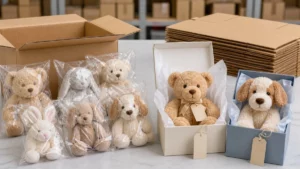
Una idea de empaque no está completa hasta que la fábrica, el inspector, el transportista, el almacén y el comprador puedan seguir las mismas instrucciones. Las notas verbales son demasiado fáciles de interpretar de manera diferente, especialmente en pedidos repetidos que se producen meses después. Por lo tanto, diseñamos el empaque de adentro hacia afuera y registramos los detalles que afectan el costo o la aceptación.
- Verifique la bolsa, la caja de venta al por menor o la caja de regalo, incluyendo las etiquetas, las advertencias, los códigos de barras, los cierres y cualquier inserto de marca.
- Coloque las piezas por caja y según el surtido de color o estilo, y luego verifique que las caras y los accesorios no estén presionados contra un borde duro.
- Mida la caja maestra sellada, verifique el peso bruto y neto, aplique las marcas de envío aprobadas y haga coincidir las cifras con la lista de empaque.
Pequeñas discrepancias en esa secuencia generan costos reales. Unas dimensiones incorrectas en la caja distorsionan el cálculo del flete, la falta de un código de barras retrasa la entrada al almacén y un surtido desequilibrado deja huecos en los estantes. La resistencia del cartón corrugado debe ser adecuada para la ruta, mientras que el espacio vacío debe limitarse para que los peluches personalizados no se muevan durante el transporte. Las dimensiones precisas también ayudan al proveedor de juguetes de peluche a planificar la carga de contenedores mixtos sin aplastar las cajas finales.
La inspección continúa una vez terminado el juguete.
Un juguete terminado puede pasar una revisión de mano de obra y aun así no convencer al comprador si el embalaje es incorrecto. Antes de sellar las cajas, revisamos los embalajes exteriores e interiores, la cantidad, el surtido, la limpieza, las etiquetas colgantes, las etiquetas de tela, las advertencias y la legibilidad del código de barras. También abrimos piezas empaquetadas al azar y observamos la cara, el cuerpo, el relleno y los accesorios como lo haría un cliente. Si se aprobara la compresión, la revisión de recuperación se repetiría en los productos a granel en lugar de basarse únicamente en la muestra de desarrollo. Las fotos de las marcas de la caja, la caja abierta, el embalaje interior, el producto individual y las etiquetas crean un registro práctico para ambas partes. Esto es importante cuando varias fábricas o almacenes gestionan un mismo pedido. El registro muestra qué se revisó y qué salió realmente del punto de carga. Para un comprador, esta evidencia es más útil que una promesa general de "embalaje cuidadoso". Para nosotros, mantiene las decisiones de calidad vinculadas a la muestra aprobada y convierte la inspección final en una confirmación, no en una búsqueda tardía de sorpresas.
Un socio de fabricación de lujo con el que los compradores pueden hablar.
YIWU VICTORY IMP. & EXP. CO., LTD. Llevamos desde 2001 trabajando en el diseño, fabricación y exportación de peluches, prestando servicios a programas de entretenimiento, venta minorista, promoción, festividades y productos para mascotas. Los compradores rara vez llegan con necesidades idénticas: uno tiene el diseño final, otro una muestra física y un tercero solo conoce el mercado objetivo y el precio. Nuestro trabajo consiste en transformar ese punto de partida en un producto que se pueda fabricar repetidamente, inspeccionar con precisión, embalar de forma adecuada y enviar a tiempo. El servicio abarca el desarrollo, el muestreo, la selección de telas y colores, las opciones de logotipo, el control de calidad, el embalaje personalizado, la coordinación logística y el servicio posventa. Los peluches existentes se pueden adaptar a un canal específico, mientras que los peluches personalizados se pueden crear en torno a un nuevo personaje o campaña. Mantenemos una comunicación práctica, incluyendo las decisiones que influyen en la apariencia, el volumen de la caja y el coste, ya que estos detalles suelen determinar si un primer pedido se convierte en un programa estable.
Conclusión
El embalaje de los peluches funciona mejor cuando se considera parte integral del producto, en lugar de una tarea de envío de último momento. Una bolsa transparente puede ser suficiente para muchos peluches al por mayor; un embalaje de compresión probado puede reducir el volumen; y una caja de venta al por menor o de regalo puede añadir valor a los peluches personalizados de alta gama. La solución ideal depende de cómo se recupera, se transporta y llega el juguete al cliente. Resolver estas cuestiones con anticipación permite al proveedor de peluches proteger su apariencia a la vez que optimiza el transporte y la manipulación.
Preguntas frecuentes
Q1¿Deberían envasarse al vacío todos los peluches?
A1: No. El envasado al vacío o por compresión solo es útil cuando una muestra a granel recupera su forma original sin dañar la tela, el relleno, el bordado ni los accesorios. Los juguetes estructurados y los productos destinados a regalos suelen requerir un embalaje más ligero.
Q2¿Qué información debe proporcionar un comprador para el embalaje personalizado de peluches?
A2: Comparta el tamaño del producto, la cantidad, el canal de venta, el mercado de destino, los archivos de marca, los requisitos de etiquetado, la presentación preferida y los límites de cajas. Una foto de referencia es útil, pero una breve nota que explique cómo se venderá el producto suele ser igual de valiosa.
Q3¿Cuándo debe aprobarse el embalaje?
A3: Apruebe el producto antes de la producción en masa, idealmente con la muestra del producto final y los materiales impresos disponibles. Envíenos la referencia del producto, la cantidad deseada, el mercado y los objetivos de embalaje a través del servicio de consulta en línea, y nuestro equipo le recomendará el siguiente paso para la toma de muestras o la elaboración de un presupuesto.


