2026 / 06 / 08
Custom Plush Toys: From Design Idea to Bulk Production
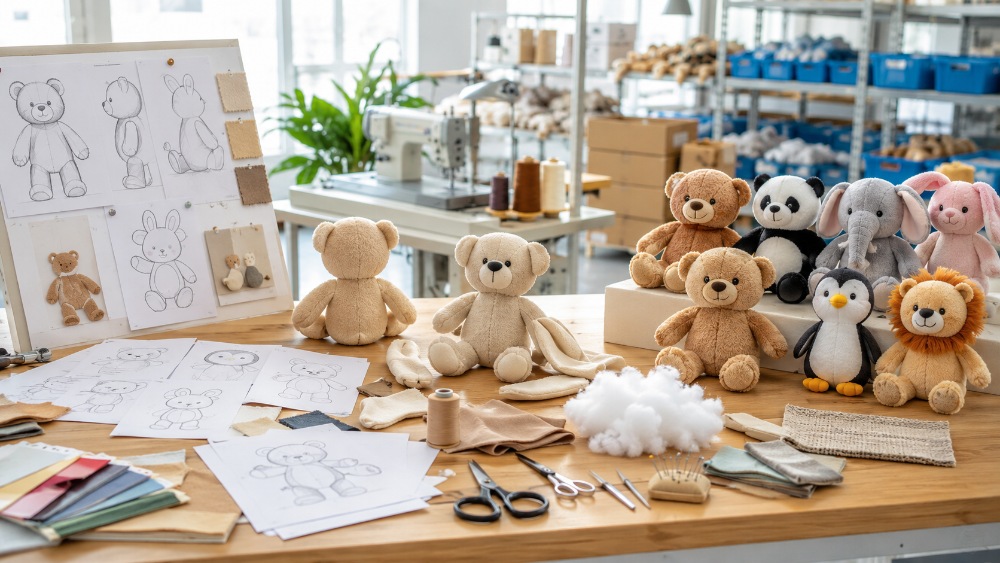
Custom plush projects often begin with a mascot, a sketch, a retail concept, or a gift campaign. The challenge is making more than one sample. It is turning that idea into mass production with stable shape, fabric, filling, labels, and packaging.
For brand owners, importers, retailers, and gift buyers, a custom plush manufacturer should help convert creative direction into repeatable products. Early decisions reduce changes, protect timing, and simplify final inspection.
Start With a Clear Product Brief Before Design Work
Define the Sales Channel and End Use
Before development starts, buyers should define the sales channel. Plush products for retail shelves may need strong display value, soft touch, and a consistent series style. Promotional plush toys may need logo placement, brand colors, budget control, and event timing. Amusement plush must consider size, weight, and repeat supply. Holiday plush needs seasonal details and a clear delivery window.
A clear brief helps the plush toy supplier recommend suitable dimensions, fabrics, filling, decoration, and packaging. Without this step, the sample may look attractive but fail to match the real sales channel.
Confirm Size, Shape, Budget, and Safety Needs
A useful brief should include size, reference images, body shape, color direction, price level, fabric preference, filling feel, label needs, and packaging method. For children or family-oriented channels, safety and testing direction should be discussed early.
These details affect the whole project. A small change in size or accessories can affect fabric usage, carton volume, safety review, sewing difficulty, cost, and timing.
Turn the Design Idea Into a Workable Plush Structure
Convert Sketches or Mascot Ideas Into Patterns
Many buyers start with a drawing, brand character, reference sample, or product photo. Custom plush toy manufacturers need to turn these materials into plush patterns, proportions, seams, facial details, and a stable three-dimensional shape.
Custom plush toy manufacturers should not judge a plush toy design only from the front. The side view, back view, sitting or standing posture, limb shape, and decoration position all affect production. A design that looks good on paper may need adjustment before sewing, filling, and shaping.
Use Product Details to Control the Final Look
Product details often decide whether a custom plush project feels finished. The 25cm Teddy Bear shows how a familiar product type can still depend on specific choices: 25cm size, soft fabric, PP cotton filling, embroidered eyes, a bow tie, and a classic gift-ready appearance.
For a custom teddy bear project, buyers should confirm face shape, eye method, fabric texture, filling level, accessory placement, and sewing finish before sample approval. These details help the product stay consistent in larger orders.
Confirm Materials, Crafts, and Sample Before Production
Match Fabric and Filling With Product Positioning
Material choice should match the product’s purpose. A gift plush may need a softer surface and fuller hand feel. A retail plush line may need a stable shape and shelf appeal. A promotional item may need simpler materials to stay within budget. A soft toy manufacturing plan should connect positioning with fabric, filling, embroidery, printing, labels, and packaging.
Fabric can affect touch, shedding, color stability, and cleaning expectations. Filling affects shape recovery and firmness. Embroidery, printing, and accessories affect both brand expression and inspection risk.
Use Sample Production to Catch Problems Early
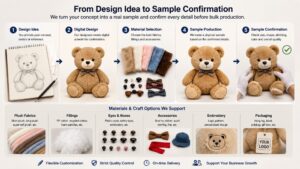
Sample production lets buyers check the product before manufacturing begins. The sample should be reviewed from the front, side, and back. Size, fabric, filling, embroidery, printing, accessories, label position, and packaging should all be checked carefully.
Sample confirmation should be specific. Instead of simply approving a photo, buyers should confirm what can and cannot be changed. If the face expression, filling level, or accessory position needs adjustment, these issues should be corrected before mass production.
Move From Approved Sample to Soft Toy Manufacturing
Prepare Production Details From the Approved Sample
Once the sample is approved, it should be translated into clear production instructions. The approved sample should guide size, pattern, fabric color, filling amount, stitching position, embroidery, accessories, hang tags, labels, packaging, and carton marks.
A reliable soft toy manufacturing process depends on these details. Vague instructions can lead to uneven shape, color differences, incorrect labels, or inconsistent filling.
Keep Shape, Size, and Details Consistent
Mass production is where many custom plush projects face real risk. Cutting, sewing, filling, shaping, and packing must stay aligned with the confirmed sample. For teddy bears, animal plush, mascot plush, or promotional plush, small variations can affect appearance and buyer confidence.
A plush toy manufacturer should control visible details: face balance, eye position, seam strength, filling fullness, fabric direction, loose threads, accessory security, and label accuracy. These checks help keep the final product closer to the approved sample.
Build Quality Checks Into the Process
Check Materials and Workmanship During Production
Quality checks should happen during production, not only before shipping. Raw materials, color, cutting, sewing, filling, and shaping all need review. Export orders also need checks for odor, loose accessories, foreign objects, seam openings, stains, and label accuracy.
The goal is to catch problems before they spread through the full order. Early checks protect both production time and final product consistency.
Review Packaging and Shipment Details
Packaging matters, especially for retail and gift channels. Hang tags, fabric labels, warning labels, barcodes, inner bags, carton marks, and packing method should match the buyer’s order requirements.
Inspection photos and shipment records reduce later disputes. For customized plush orders, clear packaging checks make receiving, warehousing, and repeat orders easier, especially when one order includes several styles, colors, or sizes.
Plan MOQ, Timeline, and Repeat Orders Realistically
Connect MOQ With Design Complexity
MOQ should be viewed together with design complexity. A basic logo customization project may be easier than a new plush shape with special fabric, detailed embroidery, multiple colors, or several sizes. The more customized the structure, the more planning is needed before production.
A custom plush manufacturer can give a more accurate suggestion when the buyer shares target quantity, budget range, size, materials, packaging needs, and sales channel. Instead of only asking for the lowest MOQ, buyers should consider whether the project is for testing, seasonal sales, or long-term replenishment.
Leave Time for Sampling, Revision, and Production
Custom plush development needs time for design review, sample making, revision, approval, material preparation, soft toy production, quality inspection, packaging, and shipping. Tight schedules often create avoidable pressure.
For holiday, promotional, or launch-based orders, buyers should leave extra time for revisions and packaging confirmation. For long-term programs, it is helpful to plan base styles, seasonal styles, and replenishment styles before the first order is completed.
Where Victory Toys Fits Into Custom Plush Projects
YIWU VICTORY IMP. & EXP. CO., LTD. supports custom plush development through design support, sample production, material selection, quality inspection, packaging planning, and bulk order coordination. Buyers can review animal plush, teddy bears, cats and dogs, fantasy plush, food plush, and seasonal plush toys when building a practical product direction.
A plush toy supplier should help connect design, material, safety details, packaging, and production planning instead of treating the project as a single sample request. Buyers can also review custom plush toy services before preparing project details.
Buyer Checklist Before Starting Custom Plush Manufacturing
Before approving mass production, buyers can check:
- Is the sales channel confirmed?
- Are size, shape, color, and target price level clear?
- Are design references ready?
- Are fabric and filling options approved?
- Has the sample been reviewed from all sides?
- Are embroidery, printing, labels, and accessories checked?
- Is the approved sample suitable for mass production?
- Are packaging, carton marks, and shipment details confirmed?
- Are the inspection steps clear before shipment?
- Is the timeline realistic for sampling, revision, production, and delivery?
Conclusion
Custom plush toys move from idea to finished goods through a series of practical decisions. A successful project needs a clear brief, workable project structure, suitable materials, careful sample confirmation, controlled production details, quality checks, and realistic timing.
For retail, gift, promotional, amusement, or seasonal plush projects, buyers can share their custom plush toy project requirements before starting development. Clear information about size, fabric, design, packaging, quantity, and delivery needs makes the next step more efficient.
FAQ
Q: What should buyers prepare before starting a custom plush toy project?
A: Buyers should prepare the target sales channel, reference images, size range, fabric preference, filling requirement, color direction, logo or label needs, packaging idea, order quantity, and delivery timeline.
Q: How does sample production help plush toys enter bulk production?
A: Sample production helps buyers confirm shape, size, fabric, filling, embroidery, printing, accessories, labels, and packaging before mass production. It reduces the risk of major changes after bulk production starts.
Q: What should buyers check before approving a custom teddy bear sample?
A: Buyers should check size, fabric touch, filling level, embroidery details, eye and nose design, bow or accessory placement, stitching strength, label accuracy, and packaging fit before approving a custom teddy bear sample.


