
2026 / 07 / 27
Why Are We Scared of Real Bears but Love Teddy Bears
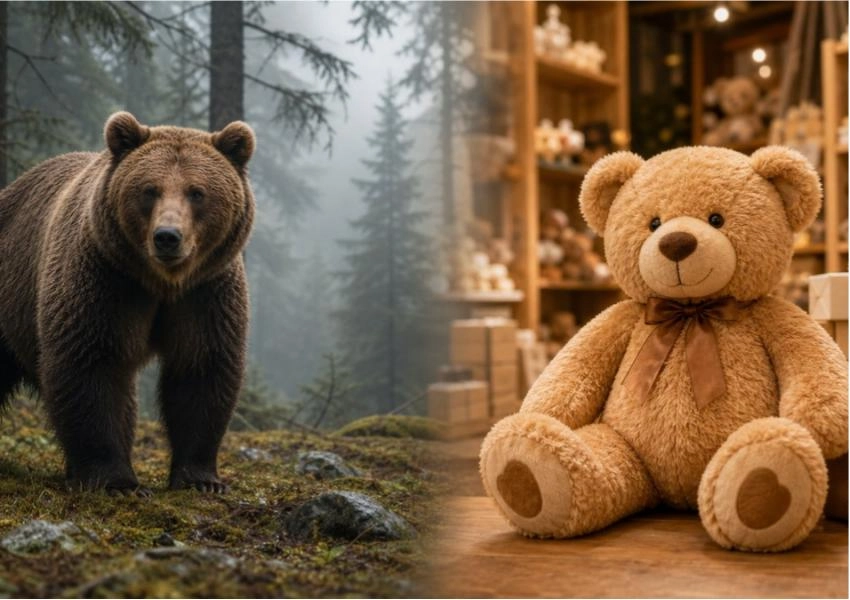
 A real bear at the edge of a trail can stop a conversation in seconds, yet a teddy bear with the same ears and muzzle often becomes a child’s comfort object or an adult’s sentimental gift. For buyers, this contrast explains why plush toys succeed when design removes threat and strengthens warmth. As a plush toy supplier, we use that emotional shift to guide shape, fabric, color, filling, facial details, and retail position, so a custom teddy bear feels safe at first glance while carrying enough character to earn attention.
The Same Bear Shape Sends Two Opposite Messages
People do not react to the word “bear” alone; they read scale, posture, distance, texture, movement, and context as one visual message. The commercial opportunity appears when those signals are deliberately reversed in a soft product.
Why a Real Bear Makes People Step Back
Real bears command caution because their bodies communicate power before they do anything dramatic. A broad chest, thick neck, large paws, claws, deep muzzle, and forward-facing mass suggest that the animal can close distance quickly, while irregular forest movement makes its next action hard to predict. Even a calm bear occupies more space than a person can control. Dark fur can blur its outline against trees, small eyes are hard to read from far away, and a lowered head may look serious because the face offers few familiar social signals.
Context completes the response. The animal is independent and capable of harm, so sensible caution remains even when someone admires its beauty. Product developers can reverse those cues: reduce scale, remove sharp features, stabilize the pose, clarify the face, and replace unpredictable movement with a body that stays where it is placed. A skilled plush toy supplier keeps the recognizable ears and muzzle, then edits signals that would feel dominant or unsafe in custom plushies.
How a Teddy Bear Rewrites the Signal
Teddy bears keep the round ears and short muzzle that make the animal recognizable, but nearly every other choice softens the message. Rounded paws replace claws, a seated posture lowers perceived energy, a larger head creates youthful proportions, and evenly placed eyes make the face predictable. Soft fabric invites touch, while resilient filling lets the body yield in an embrace and recover afterward. Beige, cream, brown, yellow, or gentle pastel colors also separate plush toys from the irregular palette of a forest animal.
The face matters most. A small embroidered mouth, balanced eye spacing, a neat nose, and raised cheeks can suggest calm attention without an exaggerated cartoon expression. Buyers developing a custom teddy bear can adjust these elements by age group and channel: a baby range may use embroidered features and quiet colors, a gift collection may add a bow or premium texture, and custom plushies for amusement may use brighter contrast. We recommend reviewing the sample from several feet away and up close, since the first shelf impression should communicate comfort before customers inspect workmanship.
Turning Emotion into a Product Brief
Once the emotional target is clear, the buyer can turn it into measurable product decisions. Two bear concepts show how one basic silhouette can serve very different programs without losing its welcoming character.
A product catalog says more than a list of available items. It reflects how a brand understands its customers, market timing, and long-term direction. For plush toy buyers, selecting characters, colors, materials, and themes is not simply about adding more products. It is about building a collection where each design has a clear role, whether it supports everyday retail, seasonal campaigns, gifting occasions, or amusement programs.
At YIWU VICTORY, we view catalog development as a structured process of selection. A successful plush toy range should balance recognizable characters with emerging trends while maintaining a consistent visual identity that allows different products to connect as part of one collection. This approach helps buyers develop custom plushies that are not only attractive individually but also meaningful as a complete product line.
Two Bear Directions for Different Retail Goals
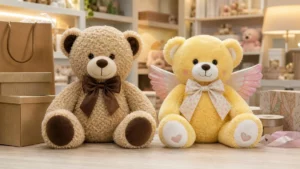
The stuffed bear follows the classic route: beige or rich brown tones, curly soft fabric, round eyes, a tidy bow, high-elasticity PP cotton, and firm stitching create a familiar gift for wholesale, seasonal displays, promotions, and everyday retail. Its balanced seated shape presents well, while the bow adds value without complicating packing. For buyers who need a dependable custom teddy bear, this direction supports color, fabric, embroidery, hang tag, and packaging changes.
The bear with wings plush toy keeps the safe foundation but adds fantasy. Warm yellow plush, white accents, a patterned bow, round eyes, pink gradient wings, and springy PP cotton make it distinctive for gift, holiday, and themed retail collections. The wings create a memorable silhouette, yet they must remain soft, symmetrical, and secure. A plush toy supplier adds practical value by reviewing decoration for seam strength, balance, carton pressure, and repeatability before bulk production of custom plushies begins.
A classic bear can anchor a long-running assortment, while a fantasy bear can refresh the range or support a campaign. Keeping the face consistent while changing color, bows, wings, size, or packaging also lets several plush toys share one visual family.
From Sketch to a Repeatable Bulk Order
A concept becomes commercially useful only when the approved sample can be repeated. We focus on decisions that affect appearance, safety, cost, and delivery, giving buyers clear checkpoints instead of vague revision cycles.
- Define the use case and target customer. Share the channel, age group, price level, quantity, size, colors, logo needs, packaging idea, and artwork. A plush toy supplier can then identify valuable features and avoidable costs.
- Approve materials and the sample. Confirm fabric feel, pile length, PP cotton firmness, face placement, accessory attachment, labels, dimensions, and color expectations. For a custom teddy bear, small eye or muzzle changes can alter the whole personality, so comments should be specific and visual.
- Lock the bulk specification. Record the approved sample, materials, decoration files, packing method, carton quantity, inspection points, and schedule. One shared reference helps custom plushies remain consistent across repeat orders.
Clear approvals also simplify later extensions. A new size, wing color, seasonal bow, or promotional label can be built from a controlled base, saving development time while protecting the familiar face across the plush toy range.
A Plush Manufacturing Partner Buyers Can Talk To
Some plush toys aren’t just sold—they’re remembered, collected, shared, and even spark trends. While there is no magic formula, the difference often lies in the details that bring a character to life, such as an expression that speaks for itself, proportions that show personality, a brand world that feels authentic, and the power to evoke memories and emotion. At YIWU Victory, we design plush toys with heart and expertise—thinking beyond the object, and into the story, culture, and emotional connection they can create. Every iconic plush begins with conscious design, industry insight, and brand sensitivity.
YIWU VICTORY IMP. & EXP. CO., LTD. is our plush toy manufacturing and export company, founded in 2001 and supported by production resources plus design studios that serve amusement, retail, promotional, holiday, and pet-product programs. We know that buyers rarely arrive with a perfect technical pack; some bring finished artwork, while others bring a rough sketch, a reference image, or simply a market idea. Different sales channels also require different product decisions. The amusement channel, for example, operates differently from traditional toy retail. Plush toys in this environment are not purchased in the same way as everyday retail products; they are selected as prizes, rewards, or attraction items where durability, visual impact, and repeat performance matter.
For amusement operators, the lowest initial price is rarely the only consideration. A prize plush toy needs to maintain its appearance after handling, support consistent production quality, and create enough appeal to encourage continued customer engagement. At YIWU VICTORY, we treat amusement as a professional market rather than a secondary channel. By working closely with buyers, we coordinate design, manufacturing, inspection, and consistency control to create plush toys that perform reliably in real operating environments.
Conclusion
Real bears inspire caution because they are powerful and unpredictable; teddy bears earn affection because design turns the same outline into softness, stability, readable emotion, and safe touch. For B2B buyers, that contrast guides proportion, fabric, face, color, accessories, and quality control. A well-planned custom teddy bear can anchor a core range, while imaginative custom plushies add campaign value. If you need a plush toy supplier to review a concept, sample, quality plan, or packaging choice, request tailored service and contact our project team through the online product inquiry. Share your market goal and idea, and we will help shape the next step for your plush toys program.
FAQ
Q1: Why do teddy bears feel safer than real bears?
A1: Teddy bears remove threatening signals through smaller-scale, rounded paws, stable seated poses, readable faces, soft fabric, and yielding filling. These choices make the toy predictable and touch-friendly while preserving the ears and muzzle that identify a bear.
Q2: What should buyers specify for a custom teddy bear?
A2: Start with the sales channel, target customer, size, quantity, fabric feel, color, filling firmness, facial style, accessories, logo method, labels, packaging, and destination market. Clear priorities help a plush toy supplier recommend a realistic sample route and control later revisions.
Q3: Can one bear design support several custom plushies?
A3: Yes. Buyers can keep the approved face and core construction while changing size, color, bows, wings, embroidery, hang tags, or gift packaging. A shared design base gives related plush toys a consistent family look and can shorten development for later collections.


